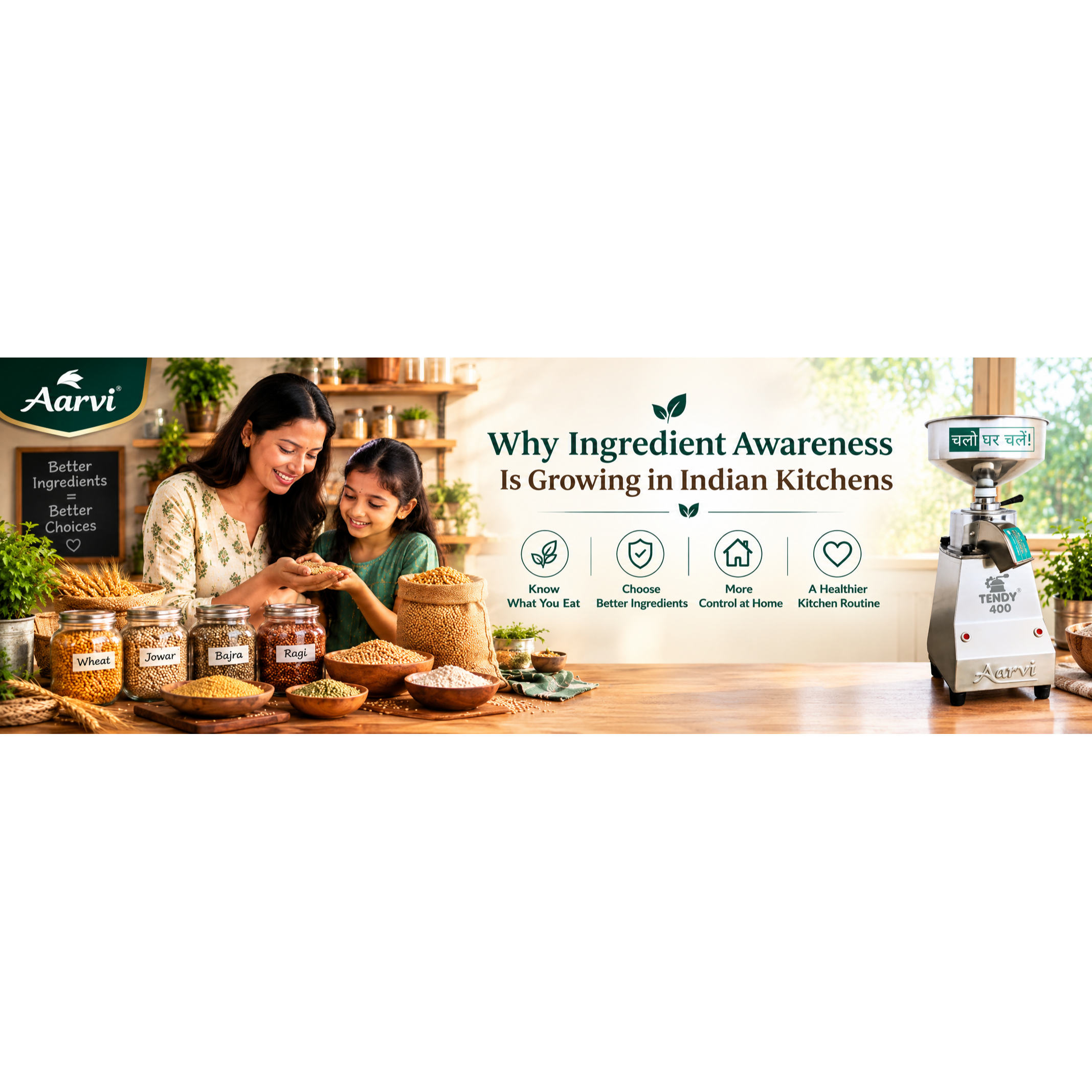
Why Ingredient Awareness Is Growing in Indian Kitchens
Indian kitchens have always been closely connected with food, ingredients and traditional cooking practices. However, in recent years, many families have started paying greater attention to what goes into their food, where ingredients come from and how everyday staples such as flour are prepared.
This growing ingredient awareness is changing the way people think about everyday food choices.
Earlier, convenience often meant purchasing ready-to-use ingredients. Today, many households are becoming more interested in understanding the ingredients they use, selecting better-quality grains and exploring ways to prepare certain foods at home.
This shift is especially visible when it comes to flour.
Whether you call it home flour, fresh atta, homemade flour, domestic flour mill, home atta chakki or flour mill for home, the idea is connected to having greater awareness and control over an important everyday ingredient.
What Is Ingredient Awareness?
Ingredient awareness simply means knowing more about the food ingredients used in everyday cooking.
For Indian families, this can include understanding:
What grain is being used?
How is it stored?
When was it processed?
What ingredients are present?
How fresh is the flour?
Where does the ingredient come from?
This does not mean that every household needs to completely change its food habits.
Instead, it represents a more informed approach to everyday cooking.
As people become more interested in food quality and preparation, the kitchen is becoming a place where ingredient choices receive more attention.
1. Why Are Indian Families Becoming More Ingredient-Conscious?
Several changes in modern lifestyles have contributed to this trend.
Consumers now have easier access to information about food, ingredients and cooking methods. Social media, food content, cooking channels and online resources have made people more curious about what they eat.
At the same time, families are becoming interested in traditional food practices that were once common in Indian homes.
Grinding grains at home is one such practice.
A modern domestic flour mill makes it possible to bring grain grinding back into the household without relying entirely on traditional manual methods.
The result is a combination of traditional awareness and modern convenience.
2. Flour Is an Everyday Ingredient
For millions of Indian households, wheat flour is not an occasional ingredient.
It is part of everyday meals.
Rotis, chapatis, parathas and several other Indian foods depend on flour as a basic ingredient.
Because flour is used so regularly, families naturally have a reason to become more interested in its quality, preparation and storage.
This is where a home flour mill can become relevant.
Instead of treating flour as simply another packaged grocery item, some households prefer to have greater involvement in the process of turning grains into flour.
3. From Packaged Flour to Greater Control
Packaged flour offers convenience, which is important for modern households.
However, some families also want greater control over the grains they use.
A flour mill for home allows users to select suitable grains and process them at home according to the manufacturer's recommendations.
This creates a more direct connection between the grain and the flour used for cooking.
The idea is not necessarily about replacing packaged flour completely.
It is about giving families another option when they want more control over their everyday ingredients.
4. Freshness Has Become an Important Conversation
Freshness is another reason ingredient awareness is growing.
When grains are stored at home and processed as needed, families can have a more direct understanding of when their flour was prepared.
A modern home atta chakki can support this type of routine by allowing suitable grains to be ground at home.
Of course, proper grain storage, machine cleaning and correct operation remain important.
Freshly ground flour is not simply about using a machine. It begins with selecting appropriate grains and maintaining good food-handling practices throughout the process.
5. People Are Looking Beyond Just Wheat
Ingredient awareness is also encouraging families to explore different grains.
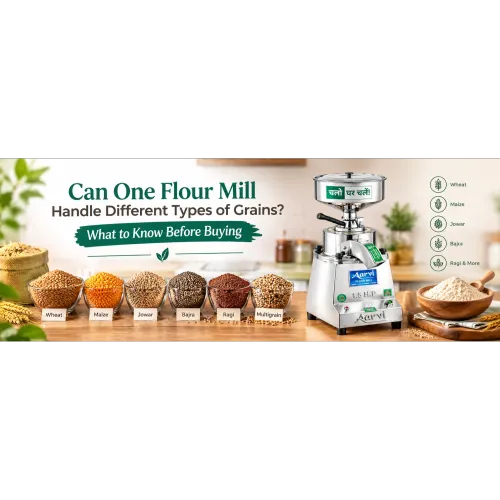
Wheat remains one of the most important staples in Indian kitchens, but traditional Indian diets include many other grains.
Depending on individual preferences and machine compatibility, households may consider grains such as:
- Jowar
- Bajra
- Ragi
- Maize
- Whole wheat
- Other suitable grains
A domestic flour mill can provide flexibility for households interested in grinding suitable grains at home.
The important point is to always check the flour mill manufacturer's instructions before processing any grain.
6. Traditional Grains Are Receiving New Attention
Many grains that have been part of Indian food traditions for generations are receiving renewed attention.
Jowar, bajra and ragi, for example, are increasingly discussed in conversations about traditional Indian diets and diverse grain choices.
This does not mean every family needs to use every grain.
Rather, people are becoming more curious about the ingredients available to them.
A home flour mill can make experimenting with suitable grains more convenient when the machine is designed for those applications.
The modern kitchen is therefore becoming a place where traditional grains and modern technology can exist together.
7. Ingredient Awareness Starts With the Grain
When discussing flour, it is easy to focus only on the finished product.
However, the grain itself is an important part of the process.
Clean, properly stored and suitable grains are essential for responsible home grinding.
Before using a domestic atta chakki, households should inspect grains and remove unwanted materials according to normal food preparation practices.
The machine is only one part of the process.
Good ingredient awareness begins before the grain enters the flour mill.
Good Grain → Proper Storage → Suitable Grinding → Freshly Prepared Flour
This simple chain helps explain why awareness is becoming an important part of modern food preparation.
8. Home Grinding Brings the Process Closer to the Kitchen
One interesting change in Indian households is the increasing interest in understanding food preparation rather than simply purchasing finished products.
A flour mill at home brings one part of the food preparation process directly into the kitchen.
Instead of separating grain selection and flour preparation completely from everyday cooking, families can make grinding part of their household routine.
This can be especially useful for people who enjoy traditional cooking practices but also want the convenience of modern appliances.
It is essentially a meeting point between traditional food habits and contemporary kitchen technology.
9. Modern Appliances Make Traditional Practices More Practical
Traditional Indian households often had different methods for processing grains.
The challenge today is that modern lifestyles leave less time for labour-intensive household activities.
This is where appliances such as a home flour mill become useful.
Electric operation and appliance-style construction can make grain grinding more practical for contemporary households.
The technology does not have to eliminate traditional practices.
Instead, it can make selected traditional practices easier to continue.
That is one reason modern domestic flour mills have found a place in kitchens that value both convenience and traditional food preparation.
10. Ingredient Awareness Is Also About Reading Labels
Ingredient awareness does not begin and end with home grinding.
When purchasing packaged food, consumers can also develop the habit of reading product labels, checking ingredient information and understanding what they are purchasing.
For packaged flour, this may include looking at the product name, ingredient information, packaging condition, storage instructions and other relevant details.
For home grinding, the focus shifts toward grain selection, storage and preparation.
Both approaches encourage a more informed relationship with everyday food.
The goal is not to create unnecessary complexity.
It is simply to know more about what you are using.
11. Food Preparation Is Becoming More Transparent
Modern consumers increasingly want transparency.
They want to understand how products are made, what ingredients they contain and how they fit into their daily routines.
Home grinding naturally provides a higher level of visibility over one part of the process.
With a home atta chakki, families can see the grain before grinding and prepare flour according to their preferred routine.
This does not automatically make every home-ground flour better than packaged flour.
Rather, it provides another way for consumers to participate in food preparation.
That sense of involvement is an important part of growing ingredient awareness.
12. The Kitchen Is Becoming More Informed
The modern Indian kitchen is no longer only about cooking.
It is increasingly becoming a place where families make decisions about ingredients, preparation methods, storage and appliances.
From selecting grains to choosing a suitable flour mill for home, consumers are becoming more involved in the process.
This does not mean complicated cooking routines.
Even simple changes, such as checking grains before grinding or cleaning a flour mill regularly, can reflect greater awareness.
Small decisions can gradually create a more informed kitchen routine.
13. Technology and Ingredient Awareness Can Work Together
Technology is sometimes viewed as separate from traditional food practices.
In reality, modern appliances can help people continue certain traditional habits in a more convenient way.
A domestic flour mill is a good example.
The basic idea of grinding grains remains traditional, while the electric appliance provides modern convenience.
This combination allows families to maintain an interest in home-prepared flour without depending on the physical effort associated with older grinding methods.
The result is not traditional versus modern.
It is traditional knowledge supported by modern technology.
14. Why Home Flour Mills Fit This Changing Lifestyle
As ingredient awareness grows, households may look for practical ways to become more involved in food preparation.
A home flour mill can support this lifestyle by bringing grain grinding into the household.
For families that regularly use flour, it can provide flexibility in selecting suitable grains and deciding when to grind them.
Modern machines are also designed with household use in mind, offering appliance-style construction and convenient operation.
However, users should always follow the manufacturer's instructions regarding suitable grains, capacity, cleaning and maintenance.
Responsible use is an important part of getting the best experience from any kitchen appliance.
15. Ingredient Awareness Does Not Mean Complicating Everyday Life
One important point is that becoming ingredient-conscious does not mean making cooking unnecessarily difficult.
Awareness can be simple.
It can mean checking the grain before grinding.
It can mean storing grains properly.
It can mean cleaning the domestic flour mill regularly.
It can mean understanding what ingredients are being used.
It can also mean choosing between packaged flour and home grinding according to the family's needs.
The objective is not perfection.
The objective is better awareness and informed choices.
Traditional Food Knowledge Meets Modern Kitchen Thinking
India has a long history of grain-based foods and traditional food preparation.
What is changing is the way modern households interact with these traditions.
Earlier, grain processing was often part of a larger manual household routine.
Today, technology allows selected parts of that process to be brought into modern kitchens.
A home flour mill represents this transition clearly.
The tradition of grinding grains remains familiar, while electric technology, compact designs and modern appliances make the process more convenient.
This is one reason the concept of the atta chakki for home continues to remain relevant.
Ingredient Awareness and the Future of Indian Kitchens
The growing interest in ingredients is likely to remain an important part of modern food culture.
Consumers are becoming more curious about grains, flour, preparation methods and food choices.
At the same time, kitchen appliances are becoming more practical and user-friendly.
This creates an interesting opportunity for products such as domestic flour mills, which connect traditional grain preparation with modern household convenience.
The future Indian kitchen may not necessarily choose between tradition and technology.
Instead, it may continue combining both.
Traditional grains. Informed choices. Modern appliances. Smarter kitchens.
How Aarvi Flour Mill Supports the Modern Home Grinding Concept
Aarvi Flour Mill focuses on domestic flour mill solutions designed for modern Indian households.
Its range of home flour mills is developed around practical household requirements, convenient operation and dependable performance.
For families interested in bringing grain grinding closer to home, selecting a suitable domestic atta chakki can be an important decision.
The right machine should be chosen according to household requirements, grain compatibility, capacity and manufacturer's operating recommendations.
With greater ingredient awareness, the flour mill becomes more than just a kitchen appliance.
It becomes part of a more informed approach to everyday food preparation.
Final Thoughts
The growing interest in ingredient awareness reflects a simple change in how Indian families think about everyday food.
People are becoming more curious about what they consume, where ingredients come from and how familiar staples such as flour are prepared.
A home flour mill provides one practical way to become more involved in the grain-to-flour process.
The goal is not to reject modern convenience.
It is to combine convenience with awareness.
From selecting suitable grains to maintaining a clean domestic flour mill, small decisions can make food preparation more informed and intentional.
Know your ingredients. Understand your process. Bring traditional grain preparation into the modern Indian kitchen.
Keywords