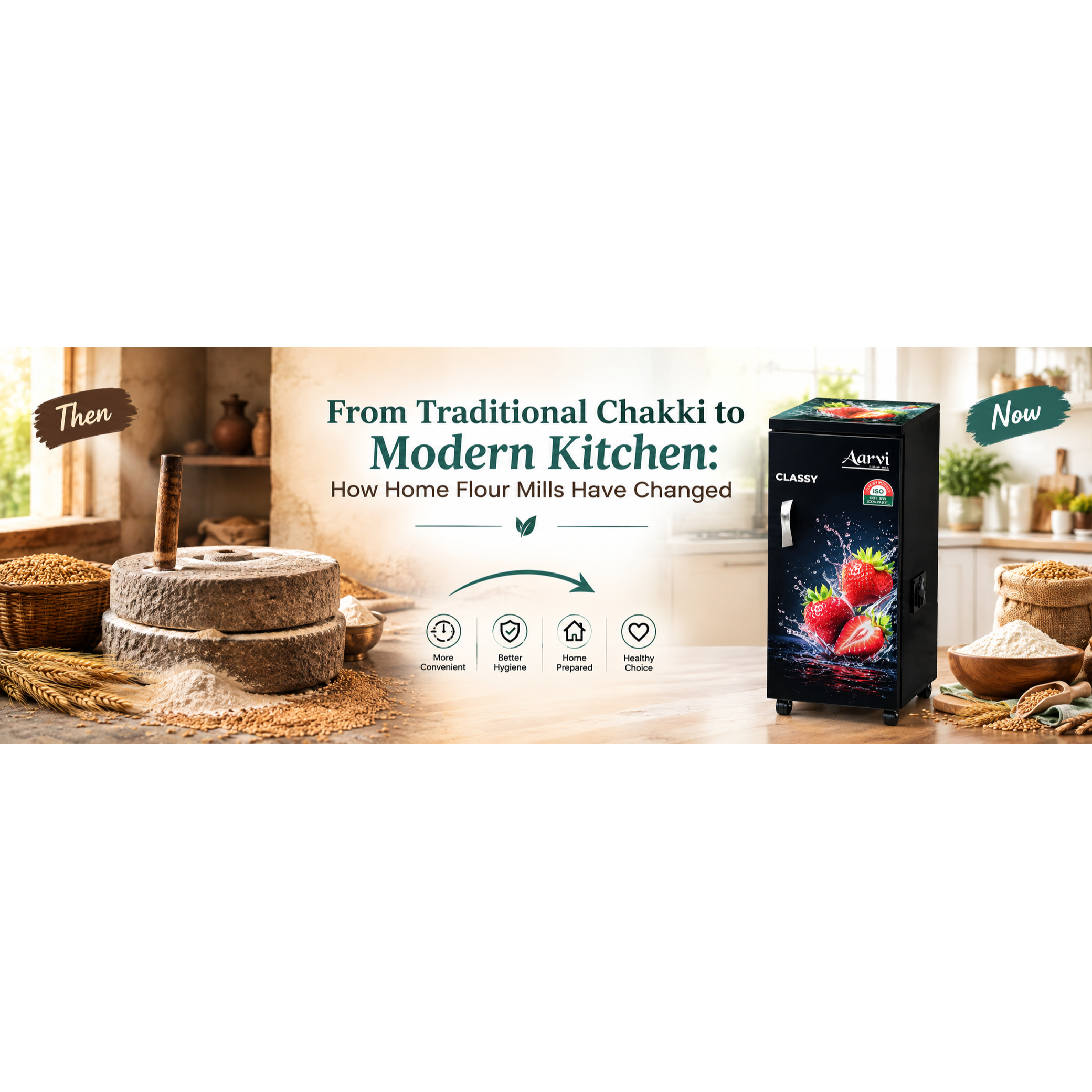
From Traditional Chakki to Modern Kitchen: How Home Flour Mills Have Changed
The way Indian families prepare flour at home has changed significantly over the years. From traditional stone grinding methods to compact and convenient domestic flour mills, making fresh atta has become easier to fit into a modern kitchen routine.
Traditional chakki systems were once a familiar part of everyday grain preparation. Today, a home flour mill allows families to grind selected grains at home with greater convenience and control.
This change is not simply about replacing an old method with a new machine. It reflects how kitchen appliances have evolved to make traditional food preparation more practical for modern households.
Whether you call it a home atta chakki, domestic flour mill, flour mill for home or domestic atta chakki, the basic purpose remains connected to one simple idea: preparing fresh flour from grains at home.
How Was Flour Traditionally Prepared?
Before modern kitchen appliances became common, grinding grains was a more physical and time-consuming activity.
Traditional stone chakki systems used two grinding stones to process grains. The grains were placed between the stones and ground through manual effort. The process required time, space and regular physical work.
For many Indian households, traditional grinding was not just a method of making flour. It was part of the everyday food preparation routine.
The concept was simple:
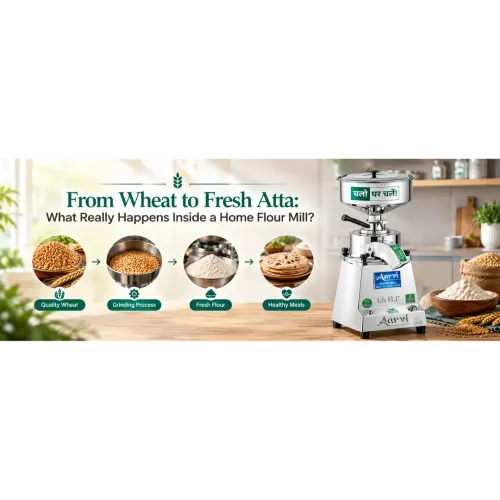
Grain → Grinding → Flour → Homemade Food
Modern domestic flour mills continue the same basic principle while making the grinding process much more convenient for today's lifestyle.
1. From Manual Grinding to Electric Flour Mills
One of the biggest changes has been the move from manual grinding to electric-powered machines.
Traditional chakki grinding depended heavily on physical effort. Modern home flour mills use an electric motor to operate the grinding mechanism, reducing the manual work required from the user.
Instead of spending significant time operating a traditional grinding system, users can place the suitable grains into the machine and allow the flour mill to perform the grinding process.
This makes a flour mill for home more practical for families who want to prepare fresh flour without the physical effort associated with traditional grinding.
2. The Traditional Chakki Concept Still Matters
Even though modern machines look very different from traditional stone chakkis, the basic idea of grinding grains at home remains.
The traditional chakki focused on grinding whole grains into flour. Modern domestic atta chakki systems bring this familiar concept into a more compact kitchen appliance.
So, the change is not about leaving the traditional idea behind.
It is about adapting it to modern kitchens.
Traditional Chakki: Manual grinding and more physical effort
Modern Flour Mill: Electric operation and greater everyday convenience
The purpose remains similar, but the way the task is performed has evolved.
3. Home Flour Mills Became More Convenient
Modern Indian kitchens are designed around convenience. Appliances are expected to perform everyday tasks without requiring excessive manual effort.
This is one reason home flour mills have become a practical option for households that prefer freshly prepared flour.
A modern domestic flour mill can bring the grinding process directly into the home, reducing the need to depend entirely on outside grinding services.
For families that regularly prepare wheat atta, having a flour mill at home can make the overall routine more convenient.
4. From Large Traditional Setups to Compact Kitchen Appliances
Traditional grinding methods generally required dedicated space and physical handling.
Modern domestic flour mills are designed as kitchen appliances that can be incorporated into the home environment.
Their enclosed body, appliance-style construction and compact form make them easier to place within a contemporary kitchen or household space.
This evolution is important because today's homes often have limited kitchen space.
A modern atta chakki for home needs to provide useful functionality while fitting naturally into the household environment.
5. More Control Over the Grains You Use
Another important change is the level of control available to the user.
With a home flour mill, families can choose the grains they want to grind instead of relying only on ready-made flour.
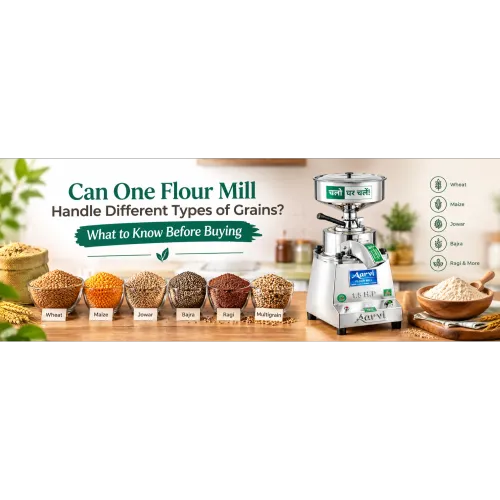
Depending on the machine and manufacturer's recommendations, households may prepare flour using suitable grains such as:
- Whole wheat
- Jowar
- Bajra
- Ragi
- Maize
- Suitable grain combinations
This can make home grinding more flexible for families with different cooking preferences.
The machine becomes a tool that helps bring the grain-to-flour process closer to the kitchen.
6. From Everyday Wheat Atta to Different Flour Choices
Traditionally, wheat was one of the most commonly ground grains for everyday atta.
Modern home grinding has made it easier for households to explore different flour choices as well.
Some families prefer traditional whole wheat atta, while others may include suitable grains in their homemade flour routine.
A domestic flour mill can therefore be useful beyond a single type of flour, provided the grains are appropriate for the particular machine.
This flexibility is one of the differences between simply purchasing packaged flour and having the ability to prepare flour at home.
7. Modern Design Has Changed the Look of Flour Mills
Traditional chakkis had a distinctly functional appearance.
Modern home atta chakki machines, on the other hand, are designed as household appliances. Many models feature enclosed bodies, contemporary finishes and appliance-style designs that can complement modern kitchens.
This means a flour mill is no longer necessarily viewed only as a traditional grinding tool.
It can also become part of the modern kitchen setup.
The evolution is therefore not only about how flour is made, but also about how the appliance fits into today's home.
8. Hygiene and Enclosed Grinding
The environment in which grains are ground is also an important consideration.
Traditional grinding methods were more open and involved direct handling of the grinding area. Modern domestic flour mills generally use an enclosed appliance design, keeping the grinding mechanism inside the machine.
However, the cleanliness of the grains and the machine still matters.
Regular cleaning, proper storage of grains and following the manufacturer's maintenance instructions are important parts of maintaining a home flour mill.
A modern appliance makes grinding convenient, but good hygiene practices remain the responsibility of the user.
9. Technology Has Made Traditional Food Preparation Easier
Modern kitchen appliances are increasingly designed to reduce the effort involved in everyday household tasks.
The evolution of the domestic flour mill is a good example.
The basic food preparation idea has remained familiar for generations, but technology has changed the way the task is performed.
Instead of manually rotating or operating a traditional grinding system, a modern electric flour mill can handle the grinding process with significantly less physical effort.
This is where traditional food preparation meets modern kitchen convenience.
10. The Purpose Has Remained the Same
Despite all these changes, the fundamental purpose of a flour mill has not changed.
Then:
Grain → Traditional Chakki → Flour
Today:
Grain → Modern Home Flour Mill → Freshly Ground Flour
The equipment has evolved, but the connection between whole grains and homemade flour remains.
This is what makes the modern atta chakki for home interesting: it combines a traditional food practice with modern appliance technology.
Traditional Chakki vs Modern Home Flour Mill
Traditional ChakkiModern Home Flour MillManual operationElectric operationMore physical effortLess manual effortTraditional grinding setupModern appliance designRequires dedicated handlingDesigned for household usePrimarily traditional processConvenient modern processMore time and effort involvedDesigned for everyday convenience
The comparison shows how the technology has changed while the basic purpose of grinding grains remains familiar.
Why Are Home Flour Mills Relevant to Modern Indian Kitchens?
Modern households often look for appliances that can simplify regular kitchen activities.
A flour mill for home can provide a convenient way to bring grain grinding into the household.
Instead of treating flour preparation as a completely separate activity, families can integrate it into their regular kitchen routine.
For households that value freshly prepared atta and want more control over the grains they use, a domestic flour mill can be a useful kitchen appliance.
What Has Really Changed From Traditional Chakki to Modern Flour Mill?
The biggest change is not the basic idea of grinding grain.
It is the experience of grinding grain.
Traditional chakki required more manual effort, physical involvement and time. Modern flour mills focus on convenience, electric operation, compact appliance design and easier integration into everyday kitchens.
In simple words:
The tradition stayed. The technology changed.
That is the story behind the evolution from the traditional chakki to the modern home flour mill.
How to Make the Most of a Modern Home Flour Mill
If you use a domestic atta chakki, a few simple practices can help maintain a good grinding routine:
- Choose clean grains suitable for your flour mill.
- Store grains properly in a clean and dry environment.
- Check grains before grinding and remove unwanted materials.
- Follow the manufacturer's instructions for suitable grains and operation.
- Clean the machine regularly according to the recommended maintenance process.
- Avoid overloading the machine beyond its recommended capacity.
- Keep the flour mill in a suitable location where it can be operated and maintained comfortably.
These simple habits can help you get consistent results while keeping your home flour mill ready for regular use.
From Traditional Food Habits to Modern Kitchen Convenience
The journey from traditional chakki grinding to modern domestic flour mills shows how technology can adapt familiar household practices to changing lifestyles.
The traditional idea of grinding grains at home has not disappeared. Instead, it has evolved into an appliance-based process that requires less manual effort and can fit more easily into today's kitchens.
A modern home atta chakki brings together the familiar concept of homemade flour with the convenience of contemporary kitchen technology.
Final Thoughts
The journey from the traditional chakki to the modern home flour mill is a story of evolution rather than replacement.
The goal has remained simple: turn selected grains into flour for everyday food preparation.
What has changed is the way we achieve it.
From manual stone grinding to electric domestic flour mills, the process has become more convenient, compact and suitable for modern household routines.
For families who prefer preparing fresh flour at home, a domestic flour mill offers a practical connection between traditional food habits and modern kitchen convenience.
Traditional roots. Modern technology. Fresh flour at home.
Keywords