Designing a Flour-Mill-Friendly Kitchen: Space, Placement, and Everyday Workflow
A well-designed kitchen is not just about beautiful cabinets, stylish countertops, or modern appliances. It is about creating a space where everyday activities feel convenient, organized, and comfortable. From preparing breakfast to cooking family meals, every appliance plays a role in making the kitchen function efficiently.
For Indian households, where fresh rotis, chapatis, parathas, and other flour-based foods are part of regular meals, a domestic flour mill for home can be a valuable addition to the kitchen.
However, bringing a flour mill home also means thinking about where it should be placed, how the surrounding space should be organized, and how it can fit naturally into everyday cooking activities.
With thoughtful planning, even a compact kitchen can accommodate a home atta chakki without compromising convenience or functionality.
Let's explore how to design a flour-mill-friendly kitchen that brings together smart space planning, practical placement, and an organized everyday workflow.
1. Why Kitchen Planning Matters When Installing a Home Flour Mill
Every kitchen has its own layout, available space, and daily routine. Some households have spacious modular kitchens, while others work with compact arrangements where every corner matters.
When introducing a home flour mill, choosing the right location is just as important as selecting the appliance itself.
A thoughtfully planned location can help you:
- Keep the flour mill accessible for regular use.
- Organize grains and flour containers conveniently.
- Maintain sufficient space around the appliance.
- Avoid unnecessary movement during food preparation.
- Keep the kitchen looking clean and organized.
- Follow the manufacturer's recommended installation and operating requirements.
Instead of treating the flour mill as an additional appliance that needs to fit somewhere, consider making it part of your kitchen's overall planning.
A well-positioned flour mill can complement the way your family already uses the kitchen.
2. Choosing the Right Place for Your Domestic Flour Mill
One of the first questions homeowners ask is: Where should I place a flour mill in my kitchen?
The answer depends on the machine's dimensions, your available floor space, electrical connections, and the manufacturer's placement instructions.
Here are some practical considerations.
Choose a Stable and Suitable Surface
A domestic flour mill should be positioned on a stable, level surface that can safely support its weight and operation.
For floor-standing models, select a suitable floor area according to the manufacturer's installation guidelines.
Avoid uneven surfaces or locations where the machine may obstruct movement.
Keep It Away from Water and Excessive Heat
Choose a dry location away from direct water exposure, kitchen sinks, and excessive heat sources.
Keeping the appliance away from unnecessary moisture helps create a safer and more suitable operating environment.
Consider Everyday Accessibility
The flour mill should be easy to access whenever you need to prepare fresh atta.
Avoid placing it in a corner where opening the machine, loading grains, collecting flour, or performing routine cleaning becomes inconvenient.
Allow Recommended Clearance
Every appliance has its own space and ventilation requirements.
Follow the manufacturer's instructions regarding clearance around the machine, airflow, and access to its components.
Kitchen planning tip: Before deciding on a permanent location, measure the appliance and compare its dimensions with the available space. Remember to account for door opening and operating access.
3. Creating a Dedicated Flour Preparation Corner
A dedicated flour preparation corner can make everyday kitchen activities more organized.
This does not necessarily require a separate room or a large kitchen area. A thoughtfully selected section of the kitchen can serve the purpose.
Consider organizing this space around three essentials:
Grain Storage: Keep suitable grains in clean, dry, properly sealed containers.
Flour Mill Placement: Position the appliance in a convenient and manufacturer-approved location.
Fresh Atta Storage: Keep a suitable airtight container available for collecting and storing prepared flour.
When these essentials are arranged logically, you can avoid unnecessary movement between different parts of the kitchen.
For example, instead of storing wheat in one corner, operating the flour mill in another, and keeping flour containers somewhere else, arrange frequently used items within convenient reach.
The goal is to create a practical preparation area that supports your regular cooking habits.
4. Smart Storage Ideas for Grain Containers and Kitchen Essentials
An organized kitchen is easier to use, especially when several ingredients and appliances are part of everyday meal preparation.
When planning your flour mill area, grain storage deserves special attention.
Use Clearly Labelled Containers
Store wheat and other suitable grains in separate containers with clear labels.
This makes it easier to identify ingredients and maintain an organized storage arrangement.
Keep Frequently Used Grains Accessible
If your family prepares wheat rotis regularly, consider keeping your wheat container in an easily accessible location.
Less frequently used ingredients can be stored in another suitable storage area.
Avoid Overcrowding the Flour Mill
Although keeping grain containers nearby is convenient, avoid placing unnecessary objects directly against the machine or blocking its required operating space.
Create a Simple Storage System
You can organize your flour preparation essentials into three categories:
- Grains waiting to be ground.
- Clean containers used during flour preparation.
- Prepared flour stored for upcoming meals.
This simple arrangement can help reduce clutter and make the kitchen feel more manageable.
Remember: Always follow suitable grain and flour storage practices to protect ingredients from moisture, contamination, and pests.
5. Making Fresh Atta Preparation Part of Your Everyday Kitchen Workflow
Kitchen efficiency is not only about where appliances are placed. It is also about how different activities connect throughout the day.
A good kitchen workflow helps you move comfortably from one task to another.
For households using a home atta chakki, flour preparation can be planned around regular cooking requirements.
A simple workflow might look like this:
Step 1: Select Your Grains
Choose clean, suitable grains according to your family's cooking preferences and the flour mill's specifications.
Step 2: Prepare the Flour Mill
Check that the machine is properly positioned and ready for operation according to its user manual.
Step 3: Grind the Required Quantity
Prepare an appropriate quantity of flour based on your household's needs and the appliance's recommended capacity.
Step 4: Collect and Store Fresh Atta
Transfer the prepared flour into a clean, dry container and store it appropriately.
Step 5: Continue With Meal Preparation
Use the prepared atta for rotis, chapatis, parathas, or other everyday recipes.
By establishing a consistent routine, flour preparation can become a natural part of household cooking rather than an additional task that disrupts your kitchen activities.
6. How to Plan a Flour-Mill-Friendly Compact Kitchen
Not every Indian home has a large modular kitchen. In apartments and compact households, available space often needs to accommodate multiple appliances and storage requirements.
Fortunately, creating an organized kitchen is more about thoughtful planning than simply having additional space.
Here are some useful ideas.
Make Use of Available Floor Space
For suitable floor-standing domestic flour mills, identify an appropriate floor location that does not interfere with kitchen movement, cabinet access, or appliance operation.
Keep the Countertop Organized
Avoid filling countertops with unnecessary containers and accessories.
A clean countertop provides more usable space for preparing ingredients and everyday cooking.
Use Vertical Storage Wisely
Wall-mounted shelves and cabinets can help organize lightweight kitchen essentials without occupying additional floor space.
However, avoid placing objects where they could interfere with the flour mill's operation or access.
Plan Around Your Kitchen Layout
Whether you have an L-shaped, U-shaped, parallel, or straight kitchen, select a location that works with your existing arrangement.
The flour mill should complement the layout rather than create an obstacle.
Measure Before Purchasing
If you are planning to buy a compact home atta chakki, compare the appliance's dimensions and operating requirements with your available kitchen space.
A suitable appliance should meet both your flour preparation needs and your installation requirements.
7. Electrical Safety and Ventilation: Important Placement Considerations
When designing a flour-mill-friendly kitchen, appearance and convenience should never come before safe appliance placement.
A domestic flour mill is an electrical appliance, so its installation and operation require proper attention.
Consider the following points:
Suitable Electrical Connection: Use an electrical supply that meets the appliance's specified requirements.
Accessible Power Socket: Select a location where the electrical connection is accessible without creating unnecessary cable obstructions.
Proper Ventilation: Maintain the clearance and airflow recommended by the manufacturer.
Dry Surroundings: Avoid locations exposed to water, excessive moisture, or unnecessary heat.
Stable Placement: Ensure that the appliance is positioned securely according to its installation instructions.
Operating Access: Leave sufficient space for loading grains, collecting flour, and performing permitted routine tasks.
Avoid using unsuitable extension arrangements or modifying the appliance's electrical connections.
If you are unsure about the electrical installation, consult a qualified electrician and follow the manufacturer's guidance.
A well-planned kitchen should make the flour mill convenient to use while supporting safe everyday operation.
8. Keeping Your Kitchen Clean and Organized Around the Flour Mill
A clean kitchen creates a more pleasant environment for food preparation.
When using a domestic flour mill, maintaining an organized surrounding area can make routine activities easier.
Start with a few practical habits:
- Keep grain containers properly closed when not in use.
- Use suitable containers for collecting prepared flour.
- Clean up any spilled grains or flour promptly.
- Avoid storing unnecessary items around the appliance.
- Follow the manufacturer's recommended cleaning procedure.
- Keep the surrounding floor dry and free from clutter.
It is also helpful to assign a specific storage location for accessories and other flour preparation essentials.
When everything has a designated place, maintaining kitchen organization becomes easier.
Remember to switch off and disconnect the appliance before cleaning whenever instructed by the manufacturer. Never use water or cleaning methods that are not recommended for the machine.
9. Designing a Kitchen That Balances Style and Functionality
Modern homeowners often want their kitchens to look attractive while remaining practical for everyday use.
A flour mill does not need to feel like an appliance that has been added without planning.
With the right arrangement, it can become a natural part of your kitchen environment.
Consider combining:
- Neutral or coordinated kitchen colours.
- Well-organized grain storage containers.
- Suitable lighting around the preparation area.
- Clean countertops and uncluttered surroundings.
- Practical cabinet arrangements.
- A dedicated location for your domestic flour mill.
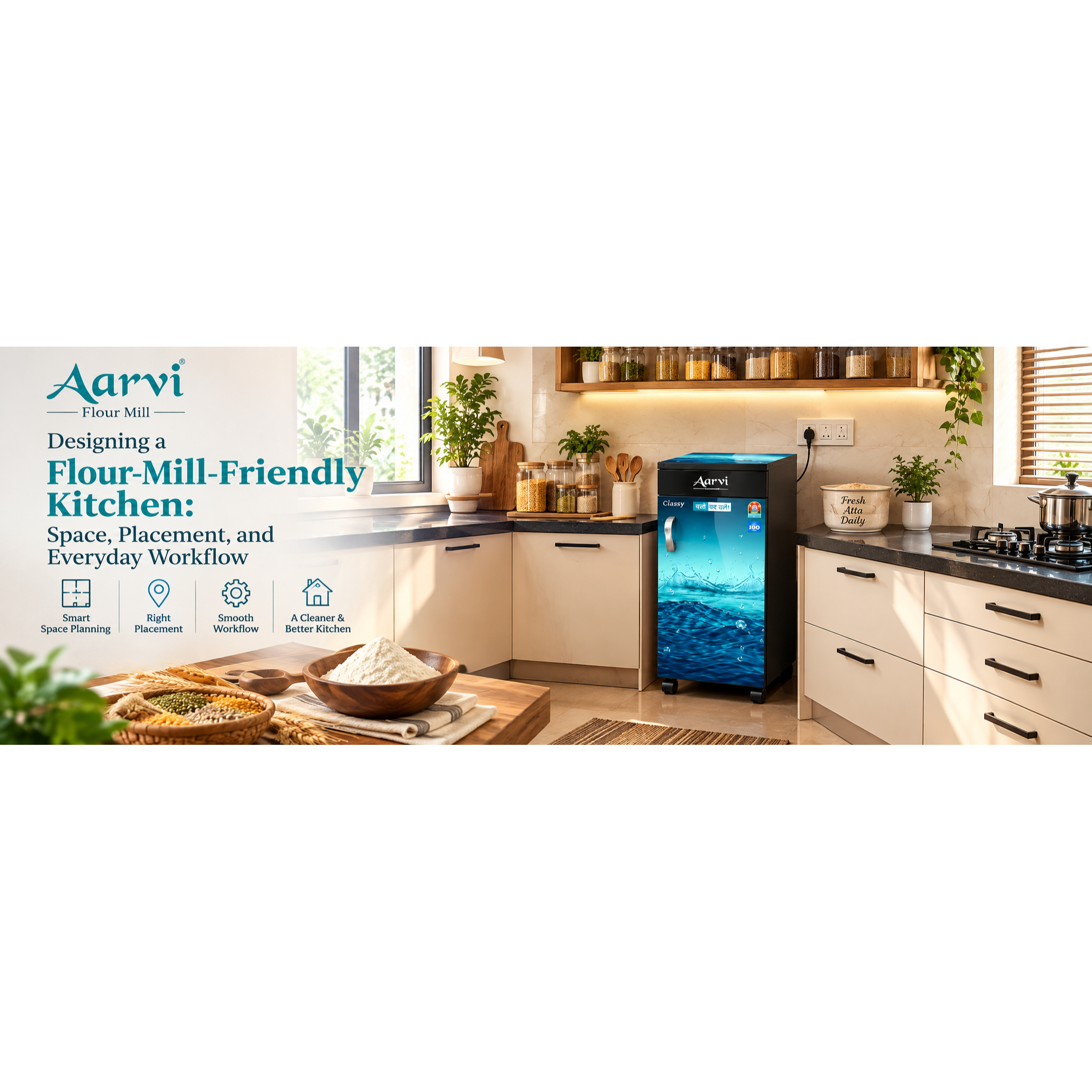
For example, a modern kitchen with warm wooden cabinets, neutral countertops, neatly arranged grain jars, and a thoughtfully positioned Aarvi Flour Mill can create an appealing balance between functionality and contemporary design.
The objective is not simply to make the kitchen look beautiful in photographs.
It is to create a space that remains comfortable and convenient during everyday cooking.
10. Aarvi Flour Mill: A Thoughtful Addition to the Modern Indian Kitchen
Every Indian kitchen has its own cooking habits, available space, and daily requirements.
Some families prepare fresh rotis every day, while others prefer grinding flour according to their weekly consumption.
Choosing a suitable domestic flour mill can help make home flour preparation part of these individual routines.
Aarvi Flour Mill brings domestic flour milling into the modern home, making it worth considering when planning a kitchen around regular flour preparation.
When exploring Aarvi Flour Mill models, consider factors such as:
- Available kitchen space.
- Machine dimensions and grinding capacity.
- Electrical and installation requirements.
- Recommended grain compatibility.
- Ease of access for everyday operation.
- Cleaning and maintenance instructions.
- Your family's regular flour consumption.
Selecting a model that suits your household requirements is an important part of creating a practical flour-mill-friendly kitchen.
A thoughtfully planned kitchen, combined with a suitable appliance, can make everyday flour preparation feel more organized and convenient.
Conclusion: A Better Kitchen Begins With Thoughtful Planning
Designing a flour-mill-friendly kitchen is not about adding more appliances or creating an elaborate layout. It is about making better use of the space you already have.
From selecting the right location for your domestic flour mill to organizing grain containers, planning electrical connections, and developing a convenient preparation routine, small decisions can make a meaningful difference.
Whether your home has a spacious modular kitchen or a compact cooking area, the right planning can help you create a comfortable environment for preparing fresh atta.
With Aarvi Flour Mill, homeowners can explore domestic flour milling as part of a thoughtfully organized kitchen that brings together traditional Indian cooking habits and modern convenience.
Smart space. Right placement. Smooth workflow. A kitchen designed for everyday living.
Frequently Asked Questions (FAQs)
1. Where should I place a domestic flour mill in my kitchen?
A domestic flour mill should be placed in a stable, dry, and accessible location that meets the manufacturer's installation requirements. Consider available space, electrical connections, ventilation, and convenient access before selecting a location.
2. Can a home flour mill fit into a small kitchen?
Yes, depending on the appliance's dimensions and installation requirements. A compact kitchen can accommodate a suitable home flour mill when floor space, storage, and operating access are planned carefully.
3. How much space does a home atta chakki require?
The required space depends on the machine's dimensions, design, and recommended operating clearance. Check the specific model's measurements and installation instructions before purchasing.
4. Is it safe to place a flour mill near a kitchen sink?
A flour mill should be kept away from direct water exposure and excessive moisture. Always follow the manufacturer's recommended placement and electrical safety instructions.
5. How can I organize grain storage around my flour mill?
Use clean, dry, properly labelled containers and keep frequently used grains in convenient storage locations. Avoid overcrowding the machine or blocking its operating space.
6. What should I consider before installing a flour mill at home?
Consider the machine's size, weight, electrical requirements, ventilation, available floor space, operating access, and manufacturer-recommended installation guidelines.
7. How can a flour mill improve everyday kitchen workflow?
A suitably positioned domestic flour mill can make it easier to organize grain selection, flour preparation, and storage within a regular cooking routine. Its convenience depends on the kitchen layout and the household's requirements.
8. How do I choose the right Aarvi Flour Mill for my kitchen?
Compare available Aarvi Flour Mill models based on their dimensions, grinding capacity, recommended grain types, electrical requirements, installation guidelines, and your family's flour consumption needs.
Keywords