One India, Many Atta Traditions: How Regional Food Habits Shape the Indian Kitchen
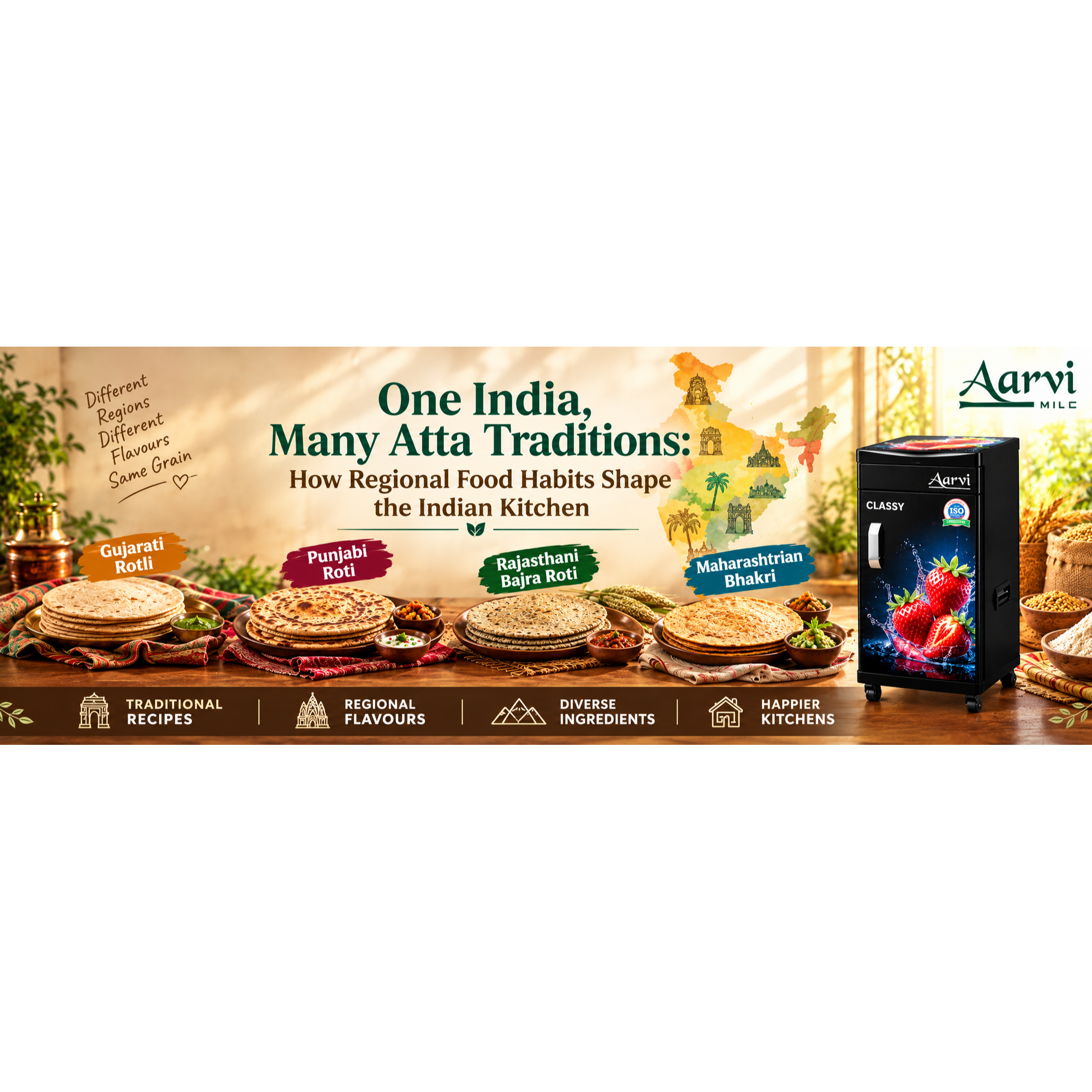
India is a country where food traditions change with every region, yet one ingredient continues to connect millions of kitchens: grain. From soft Gujarati rotlis and Punjabi rotis to Rajasthan's traditional bajra roti and Maharashtra's wholesome bhakri, every region has its own relationship with flour, grains, and everyday meals.
These regional differences reflect India's rich culinary heritage, local agricultural practices, and family food traditions. While wheat remains a staple in many households, grains such as bajra, jowar, maize, and ragi also play an important role in traditional Indian cooking.
Today, modern kitchens are finding new ways to preserve these food traditions. A home flour mill or domestic atta chakki allows families to grind suitable grains at home and prepare fresh flour according to their cooking preferences.
Let's explore how regional food habits shape the Indian kitchen and how a modern flour mill can fit into India's diverse food culture.
1. Gujarat: Soft Rotlis and Everyday Wheat Flour
In Gujarat, rotli is an essential part of everyday meals. Usually prepared with wheat flour, water, and a little care while kneading and rolling, Gujarati rotlis are known for their soft texture and their place in traditional home-cooked food.
From simple dal-bhat-shaak to festive Gujarati thalis, wheat flour remains an important kitchen ingredient. Thepla, puri, and other regional favorites further demonstrate how versatile flour can be in Gujarati cooking.
For families that prepare rotlis regularly, a home flour mill for fresh atta can offer a convenient way to grind wheat according to daily requirements.
Grinding wheat at home also gives households greater control over grain selection and the quantity of flour prepared at a time.
Traditional favorite: Gujarati Rotli
Common grain: Wheat
Kitchen connection: Fresh atta for everyday meals
2. Punjab: The Tradition of Hearty Wheat Rotis
Punjab is widely associated with wheat-based foods, including rotis, parathas, and a variety of traditional breads. Wheat farming has a significant place in the region's agricultural identity, and wheat flour is a familiar ingredient in many Punjabi households.
A freshly prepared roti served with dal, seasonal vegetables, curd, or other traditional accompaniments is a classic example of the simplicity and variety of Indian home cooking.
In households where rotis and parathas are prepared frequently, a domestic flour mill can help make flour preparation a regular part of the kitchen routine.
Families can select their preferred wheat and grind quantities that suit their cooking needs while following the flour mill manufacturer's instructions for safe and effective use.
Traditional favorites: Punjabi roti and paratha
Common grain: Wheat
Kitchen connection: Everyday flour for hearty family meals
3. Rajasthan: Bajra Roti and Traditional Grain Choices
Rajasthan's food culture reflects its climate, geography, and long-standing agricultural traditions. Bajra, also known as pearl millet, has an important place in traditional Rajasthani cuisine.
Bajra roti is a well-known regional preparation, often enjoyed with garlic chutney, curd, vegetables, or other local accompaniments. Wheat-based breads and other grain preparations are also part of the region's diverse food habits.
The use of different grains highlights an important aspect of Indian cooking: flour preferences are shaped not only by taste but also by regional availability and culinary traditions.
For households that enjoy preparing different types of traditional flour, a home atta chakki may offer additional flexibility when the machine is specifically suitable for the grains being used.
Before grinding bajra or any other millet, always check the appliance's recommended grain types and operating guidelines.
Traditional favorite: Bajra Roti
Common grain: Pearl millet (bajra)
Kitchen connection: Regional grain diversity and traditional recipes
4. Maharashtra: Jowar Bhakri and Regional Food Heritage
Maharashtra has a rich tradition of grain-based cooking, particularly in regions where jowar and bajra are commonly used. Jowar bhakri and bajra bhakri are familiar examples of traditional breads that continue to feature in many Maharashtrian meals.
Bhakri is often served with pithla, vegetables, chutneys, and other regional dishes. Its preparation reflects the diversity of India's flatbreads, where the grain, texture, and cooking method can differ considerably from one region to another.
Unlike wheat dough, millet-based preparations may require different handling techniques. The right flour texture and preparation method depend on the grain and the recipe.
A suitable flour mill for home can help families prepare flour from recommended grains, making it easier to explore traditional recipes alongside everyday wheat-based meals.
Traditional favorites: Jowar Bhakri and Bajra Bhakri
Common grains: Sorghum (jowar) and pearl millet (bajra)
Kitchen connection: Traditional bhakri and regional grain-based meals
5. Beyond Four Regions: India's Many Atta Traditions
India's flour traditions extend far beyond Gujarat, Punjab, Rajasthan, and Maharashtra. Every region brings its own ingredients, techniques, and recipes to the country's culinary landscape.
Here are a few more examples of India's diverse grain-based food culture:
- South India: Ragi, rice, and other grains feature in regional preparations, alongside wheat-based foods.
- Central India: Wheat, jowar, maize, and other locally used grains contribute to everyday meals.
- Eastern India: Rice is a major staple in many areas, while wheat flour is used in breads and other preparations.
- Northern India: Wheat-based rotis and parathas are common in many households, alongside regional grain variations.
- Western India: Wheat, bajra, and jowar feature in different combinations depending on local food traditions.
The exact grains and recipes vary between states, communities, and households. This diversity shows that Indian food culture cannot be defined by a single grain or one style of bread.
Instead, it is a collection of regional traditions connected by the everyday practice of preparing nourishing meals for the family.
6. How a Home Flour Mill Fits Into India's Regional Food Culture
Traditional grain grinding has been part of Indian households for generations. Modern home flour mills bring the basic idea of grinding grains into a convenient appliance designed for domestic use.
A home flour mill can be particularly useful for families that regularly prepare rotis, chapatis, parathas, or other flour-based recipes.
Depending on the model and its specifications, a domestic flour mill may support different grains and flour requirements.
Here are some practical benefits to consider:
Control Over Grain Selection
Families can choose clean, suitable grains according to their preferences and the recipes they prepare. Grain quality and proper storage remain important when preparing flour at home.
Fresh Flour When Required
Instead of grinding a large quantity at once, households can prepare flour according to their daily or weekly cooking needs. The suitable quantity depends on family size, consumption, and machine capacity.
Flexibility for Different Recipes
From everyday wheat rotis to selected millet-based preparations, a compatible flour mill can help families explore different flour options. Always verify which grains your particular machine can grind.
Convenient Everyday Preparation
An automatic domestic flour mill can simplify the process of grinding grains at home, helping make fresh flour preparation more convenient for busy households.
7. Wheat, Bajra, Jowar, and More: Choosing the Right Grain
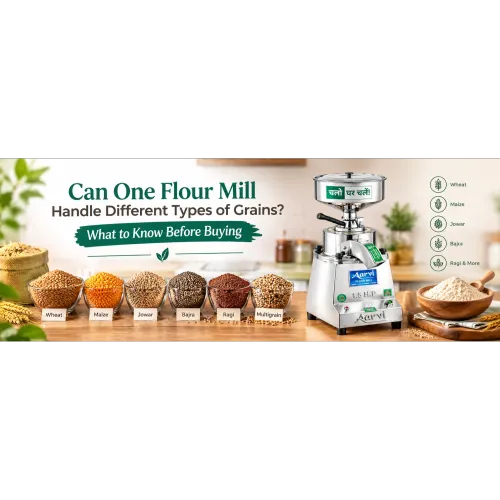
Choosing a grain is an important part of preparing traditional Indian flour. Different grains have different characteristics, flavors, textures, and preparation requirements.
Wheat: Commonly used for rotis, chapatis, parathas, puris, and thepla.
Bajra: Traditionally used for bajra rotis and bhakris in several parts of India.
Jowar: Commonly used for bhakri and other regional preparations.
Maize: Used in dishes such as makki di roti and other regional recipes.
Ragi: Used in a variety of traditional preparations, including rotis and other grain-based dishes.
Not every home flour mill is suitable for every grain. Before purchasing or operating a domestic flour mill, review its specifications, recommended grain list, and maintenance requirements.
For multigrain flour, ensure that the appliance supports the selected ingredients and that the grains are prepared according to the manufacturer's guidance.
8. Traditional Recipes Meet the Modern Indian Kitchen
Indian food traditions continue to evolve while remaining closely connected to family habits. Many households still prepare recipes passed down through generations, even as modern appliances make everyday kitchen tasks more convenient.
A domestic flour mill can bring these two ideas together: the familiarity of traditional grain-based cooking and the convenience of grinding flour at home.
For one family, this may mean preparing fresh wheat flour for Gujarati rotlis. For another, it may mean exploring suitable millet flours for regional recipes. The right choice depends on the family's preferences, cooking habits, and the capabilities of the machine.
This is what makes India's food culture so interesting. Although the ingredients and recipes differ, the kitchen remains a place where tradition, taste, and everyday convenience come together.
9. How to Choose a Home Flour Mill for Your Family
If you are considering a home flour mill for fresh atta, think about how your family actually cooks rather than choosing a machine based on appearance alone.
Consider these important factors:
- Family size: Estimate how much flour your household uses regularly.
- Grinding capacity: Choose a capacity suitable for your flour requirements.
- Grain compatibility: Confirm whether the machine supports wheat, bajra, jowar or other grains you intend to use.
- Ease of cleaning: Check the manufacturer's cleaning and maintenance instructions.
- Safety features: Review the available safety mechanisms and operating guidelines.
- Space and installation: Consider your kitchen space, electrical requirements and installation needs.
- After-sales support: Check warranty terms, service availability and access to spare parts.
A carefully selected domestic flour mill can become a useful part of the kitchen routine when its features match the household's needs.
10. Aarvi Flour Mill: Bringing Grain Traditions Into Modern Homes
India's diverse food habits remind us that every kitchen has its own preferences. Some families prepare wheat rotis every day, while others enjoy traditional bhakris, millet-based recipes or a wider variety of grain preparations.
Aarvi Flour Mill celebrates the connection between traditional Indian food and modern home convenience. With a focus on domestic flour milling, choosing a suitable appliance can help households make flour preparation part of their everyday cooking routine.
When exploring Aarvi Flour Mill models, consider the machine's capacity, supported grains, features and suitability for your family's requirements. Selecting the right model begins with understanding how you cook and what you expect from a home flour mill.
From familiar wheat rotis to regional grain traditions, the Indian kitchen continues to bring together a remarkable variety of flavours, ingredients and cooking practices.
Conclusion: One India, Many Atta Traditions
From Gujarati rotli and Punjabi roti to Rajasthani bajra roti and Maharashtrian bhakri, India's regional food traditions tell a story of diversity, local ingredients and generations of home cooking.
Wheat remains an everyday staple in many households, while bajra, jowar, maize, ragi and other grains contribute to the country's rich culinary heritage.
A suitable home flour mill can help modern families continue these traditions by making it convenient to grind selected grains at home. By choosing the right grains, following the manufacturer's instructions and maintaining the appliance properly, households can make flour preparation fit their individual cooking habits.
Different regions may have different recipes, but the idea remains the same: good food brings people together.
One India. Many atta traditions. Countless ways to make every kitchen feel like home.
Frequently Asked Questions (FAQs)
1. What is the importance of atta in Indian food culture?
Atta is an important ingredient in many Indian households, particularly for preparing rotis, chapatis, parathas and other regional breads. Different regions use different grains and preparation methods according to local food traditions.
2. Which grains are commonly used in Indian flour preparation?
Wheat, bajra, jowar, maize and ragi are among the grains used in different Indian recipes. The most suitable grain depends on the dish, regional tradition and personal preference.
3. Can a home flour mill grind grains other than wheat?
Some domestic flour mills support selected grains such as bajra, jowar or maize, while others may have limitations. Always check the manufacturer's specifications before grinding grains other than those recommended for your machine.
4. What are the benefits of using a domestic flour mill?
A domestic flour mill allows households to grind suitable grains at home, control the quantity of flour prepared and incorporate fresh flour preparation into their regular cooking routine.
5. How do I choose the right flour mill for my home?
Consider your family size, daily flour consumption, required grinding capacity, supported grains, cleaning requirements, safety features, available space and after-sales service before choosing a model.
6. Is freshly ground atta suitable for everyday cooking?
Freshly ground atta can be used for everyday recipes such as rotis, chapatis and parathas. Store flour appropriately in a clean, dry, airtight container and follow suitable food-storage practices to maintain its quality.
Keywords