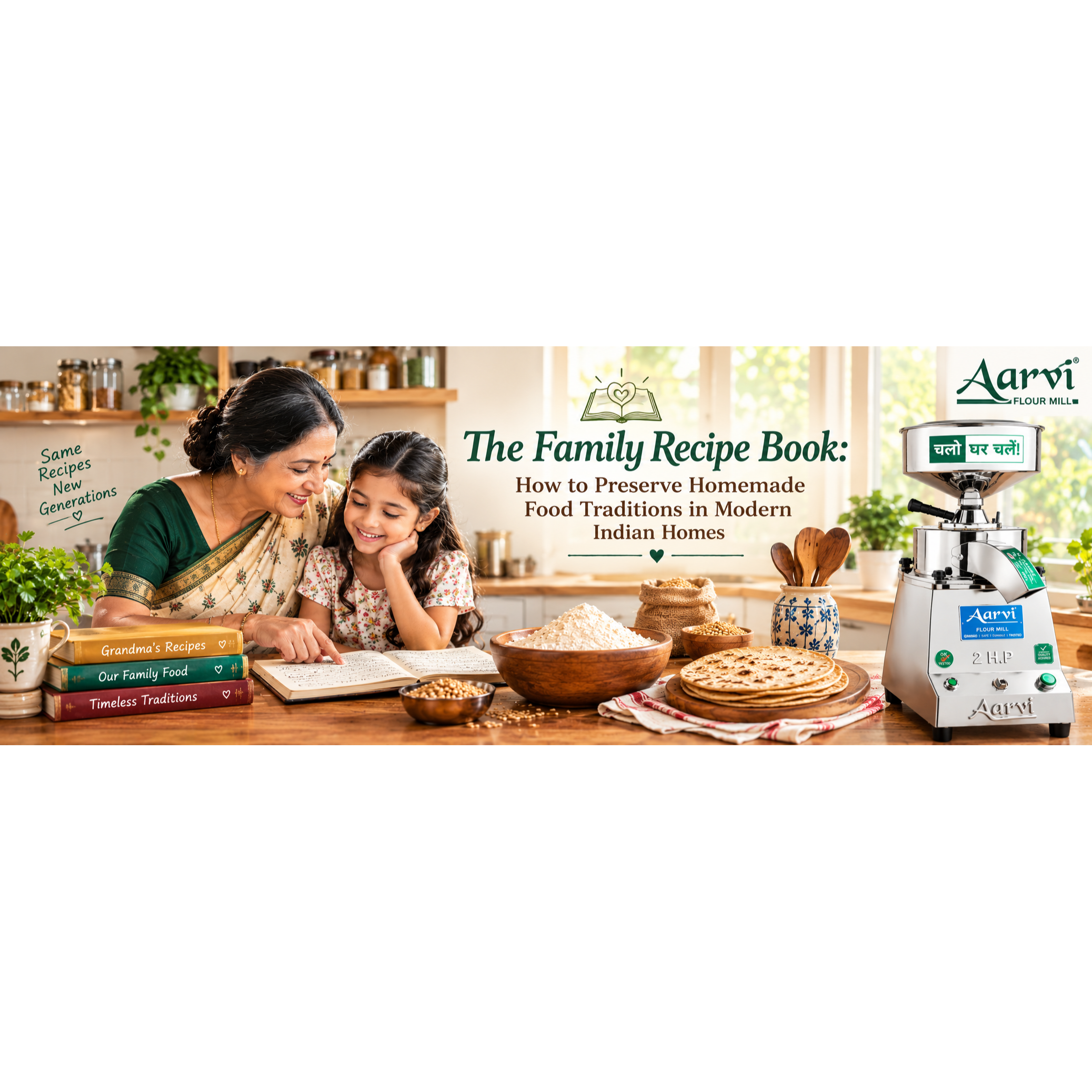
The Family Recipe Book: How to Preserve Homemade Food Traditions in Modern Indian Homes
Food is more than something we eat every day. In many Indian homes, recipes carry family memories, cultural traditions, and the special cooking methods passed down from one generation to another. From a grandmother’s soft rotis to a traditional family snack prepared during festivals, these recipes often hold a special place in our hearts.
However, modern lifestyles, busy schedules, and changing cooking habits can make it difficult to continue these traditions. Many families now look for practical ways to preserve their favourite recipes while making everyday cooking easier.
Creating a family recipe book, understanding traditional ingredients, and using convenient kitchen appliances such as a domestic flour mill can help families keep their homemade food traditions alive.
1. Why Family Recipes Are Special in Indian Homes
Every family has its own way of preparing everyday meals. Even a simple roti or paratha may taste different from one household to another because of the ingredients, preparation methods, and cooking techniques used.
Family recipes are special because they connect generations. Grandparents often share cooking tips that they learned from their parents, while younger family members discover these traditions by helping in the kitchen.
Some recipes are prepared regularly, while others are made during festivals, family gatherings, and special occasions. Preserving these recipes helps ensure that valuable cooking knowledge is not lost over time.
2. How Modern Lifestyles Are Changing Home Cooking
Today, many Indian families manage work, education, household responsibilities, and other daily activities. As a result, cooking routines have changed, and people often look for ways to save time without giving up familiar homemade meals.
Traditional recipes may require specific ingredients, preparation techniques, or a little extra planning. When these details are not recorded, it can become difficult for younger family members to recreate the same dishes.
A few simple habits can help:
- Write down important family recipes and cooking instructions.
- Record ingredient quantities and preparation steps.
- Save special recipes for festivals and family occasions.
- Involve children and younger family members in simple cooking activities.
- Use practical kitchen tools that support your regular cooking routine.
These small steps can make traditional cooking easier to continue in a modern home.
3. Create a Family Recipe Book
A family recipe book is a simple way to preserve favourite dishes and the stories behind them. It can be a handwritten notebook, a digital document, or a collection of recipe cards.
Start by listing the recipes that your family prepares most often. Include everyday meals as well as dishes associated with festivals, celebrations, and family memories.
For each recipe, record:
- Recipe name: Write the traditional or family-specific name.
- Ingredients: List the ingredients and their quantities.
- Preparation method: Explain the steps in simple language.
- Family tips: Add special techniques or instructions shared by elders.
- Occasion: Mention whether the recipe is prepared daily or for a special event.
You can also add photographs and short stories explaining who introduced the recipe to the family. This makes the recipe book more personal and useful for future generations.
4. Preserve Traditional Ingredients and Cooking Methods
The ingredients used in a recipe can influence its texture, flavour, and final result. This is particularly noticeable in traditional Indian meals, where flour plays an important role in preparing rotis, parathas, puris, and many regional dishes.
Families may follow different preferences when selecting wheat or other grains for their everyday cooking. Recording these preferences in a family recipe book can help younger members understand how familiar dishes are traditionally prepared.
It is also useful to document practical details, such as how much flour is generally needed, how the dough is prepared, and how long it should rest before cooking.
Preserving these details does not mean every generation must follow exactly the same routine. Instead, it helps families understand the original method while allowing them to adapt recipes to their current needs.
5. How a Home Flour Mill Supports Traditional Cooking
A home flour mill can be a practical addition to a household that regularly prepares fresh flour for traditional meals. Instead of depending entirely on ready-made flour, families can grind suitable grains at home according to their preferences and cooking requirements.
A domestic flour mill can support everyday preparation for recipes such as:
- Homemade wheat rotis and chapatis.
- Parathas prepared using family recipes.
- Traditional flatbreads made with suitable grains.
- Flour-based snacks and other homemade preparations.
The appropriate grain, grinding setting, and flour texture depend on the recipe and the flour mill's capabilities. Always follow the manufacturer's instructions for suitable grains and operation.
For families that value homemade cooking, an automatic flour mill for home can make flour preparation more convenient and help it fit into an established kitchen routine.
Aarvi Flour Mill offers domestic flour mill options for home use, helping families incorporate convenient flour preparation into their everyday cooking habits.
6. Involve the Next Generation in Family Cooking
One of the most effective ways to preserve food traditions is to involve children and younger family members in the kitchen. They can learn how recipes are prepared, why certain ingredients are used, and which small details make a family dish distinctive.
Cooking together also creates opportunities for family members to share memories and learn from one another.
Here are a few simple ideas:
- Ask grandparents to demonstrate a favourite traditional recipe.
- Let children help with age-appropriate tasks, such as measuring ingredients.
- Explain the purpose of different ingredients and cooking steps.
- Prepare a traditional family dish together during weekends or holidays.
- Record the recipe so that everyone can refer to it later.
Adults should supervise children around hot surfaces, electrical appliances, and food-processing equipment. Keeping these activities safe and enjoyable helps make cooking a positive family experience.
7. Make Traditional Cooking Practical for Today's Kitchen
Preserving family recipes does not require a return to every old cooking method. Modern kitchens can combine traditional knowledge with convenient appliances and better organisation.
For example, families can prepare a weekly meal plan, organise commonly used ingredients, keep recipe notes accessible, and choose kitchen appliances that suit their space and cooking habits.
A flour mill for home use may be useful for households that regularly prepare fresh atta. Before selecting one, consider available space, household requirements, ease of cleaning, and the manufacturer's specifications.
The goal is to make familiar recipes easier to prepare without losing the personal touches that make them special.
8. Keep Family Food Traditions Alive Through Everyday Habits
Food traditions survive when they remain part of everyday life. A recipe does not need to be reserved for a special occasion to remain meaningful. Even a simple family meal can help younger generations appreciate familiar flavours and cooking practices.
Families can preserve these traditions by maintaining their recipe books, sharing cooking responsibilities, and making time for occasional cooking sessions together.
It is equally important to remain flexible. Ingredients, equipment, and routines may change over time, but the stories and knowledge behind family recipes can continue to be shared.
A combination of written recipes, shared experiences, and practical kitchen solutions can help keep homemade food traditions relevant for years to come.
Conclusion
Family recipes are an important part of India's food culture. They preserve memories, connect generations, and reflect the cooking habits that make every household unique.
Creating a family recipe book, documenting traditional ingredients, involving younger family members, and adapting cooking routines to modern lifestyles are simple ways to protect these traditions.
For households that regularly prepare homemade rotis and other flour-based dishes, a domestic flour mill can also become a useful part of the kitchen routine. With convenient solutions from Aarvi Flour Mill, families can continue enjoying the experience of homemade cooking while passing their favourite recipes on to the next generation.
Preserve the recipes you love, share the stories behind them, and keep your family's food traditions alive.
Keywords