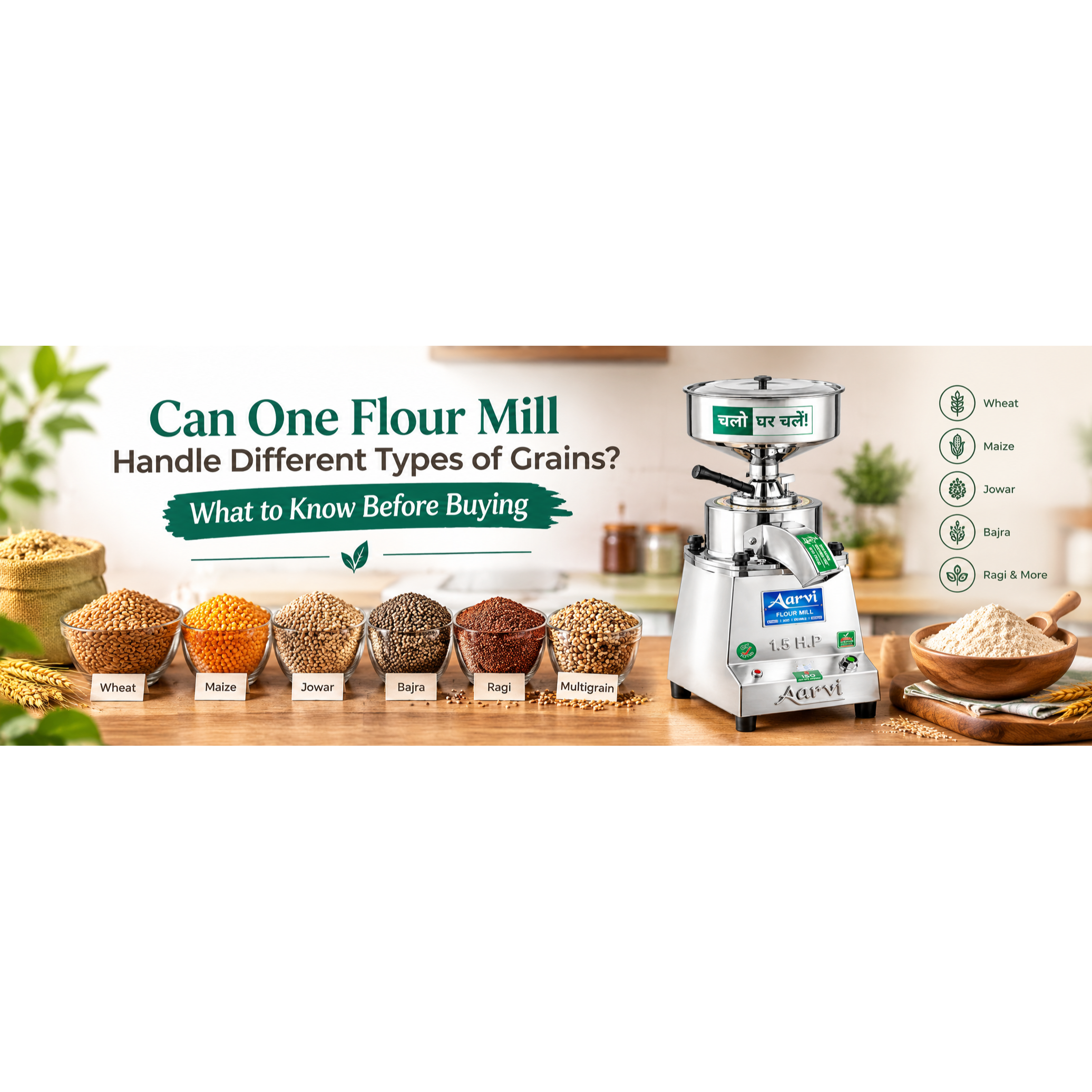
Can One Flour Mill Handle Different Types of Grains? What to Know Before Buying
A flour mill is no longer used only for grinding wheat. Many Indian households today prepare different types of flour at home, including wheat, jowar, bajra, maize, and ragi. This naturally raises an important question: Can one flour mill handle different types of grains?
The answer depends on the flour mill's design, grinding mechanism, and manufacturer specifications. While some domestic flour mills are designed to handle multiple suitable grains, not every machine is suitable for every type of grain.
Understanding the grain compatibility of a home flour mill before buying can help you choose a machine that matches your family's everyday cooking requirements.
Can a Home Flour Mill Grind Different Types of Grains?
Yes, some domestic flour mills are designed to grind more than just wheat. Depending on the model, a suitable flour mill may be capable of processing grains such as
- Whole wheat
- Jowar
- Bajra
- Maize
- Ragi
- Other suitable grains
- Selected multigrain combinations
However, the important point is that grain compatibility varies from one flour mill to another.
Before grinding any grain, always check the manufacturer's recommended grain list and operating instructions for your particular model.
1. Wheat: The Most Common Grain for Home Grinding
Wheat is the primary grain used in most Indian households for making everyday atta.
A home atta chakki designed for household wheat grinding can turn whole wheat into fresh flour for everyday recipes such as:
- Roti
- Chapati
- Paratha
- Thepla
- Puri
- Other wheat-based recipes
Because wheat is a regular part of many Indian kitchens, checking the machine's wheat grinding capacity should be one of the first things to consider when buying a flour mill for home.
2. Jowar: A Popular Alternative Grain
Jowar is another grain commonly used in Indian cooking. Its flour can be used for preparing traditional recipes such as jowar bhakri and other preparations.
If you want to grind jowar at home, make sure the domestic flour mill you choose specifically supports it.
Different grains have different physical characteristics, so a machine should only be used for grains recommended by its manufacturer.
3. Bajra: Check Compatibility Before Grinding
Bajra is widely used in Indian households, particularly for traditional recipes.
If you are looking for a multi-grain flour mill, check whether the model is suitable for bajra before purchasing it. The ability to grind wheat does not automatically mean that a machine is designed to handle every other grain.
Always refer to the manufacturer's specifications rather than assuming that all grains can be processed in the same way.
4. Maize and Corn-Based Flour
Maize is another grain that some domestic flour mills may support.
Corn or maize can be used in different Indian recipes, and having the option to prepare maize flour at home can add flexibility to your kitchen routine.
Before using maize in a home flour mill, check the recommended grain list, preparation requirements, and operating instructions for your specific machine.
5. Ragi and Other Grains
Ragi is also used in many Indian households for different traditional and modern recipes.
A suitable automatic flour mill may offer the flexibility to grind ragi along with other compatible grains. However, the exact suitability depends on the machine's grinding system and manufacturer recommendations.
This is why checking the specifications before buying is important if you regularly use multiple types of grains.
6. What About Multigrain Flour?
Multigrain atta is one of the main reasons families look for a multi-grain flour mill.
Instead of relying on only wheat, you may want to combine suitable grains according to your family's cooking preferences. Wheat, jowar, bajra, ragi, and other compatible grains can be used in different combinations where the machine supports them.
However, multigrain grinding should not be treated as a universal feature. Always check which grains and combinations are approved for your particular home atta chakki.
7. Why Grain Compatibility Matters
Different grains can vary in:
- Size
- Hardness
- Moisture content
- Texture
- Oil or fat content
- Grinding characteristics
Because of these differences, a flour mill designed for one type of grain may not necessarily be suitable for another.
This is why grain compatibility should be an important factor when choosing a domestic flour mill.
8. What Should You Check Before Buying a Multi-Grain Flour Mill?
If you want one machine for different types of grains, don't look only at the appearance or motor power. Check the complete specifications.
Grain Compatibility
First, check exactly which grains the machine is designed to grind.
Grinding Capacity
Look at the machine's grinding capacity and consider how much flour your family normally needs.
Motor and Grinding System
The motor and grinding mechanism are important parts of a home flour mill. Check the manufacturer's specifications rather than comparing horsepower alone.
Hopper Capacity
A suitable hopper size can make regular grinding more convenient, especially for families that prepare flour in larger quantities.
Cleaning and Maintenance
When grinding different grains, some residue may remain inside the grinding area. Easy cleaning and regular maintenance can help keep the machine ready for the next use.
Manufacturer Instructions
Always follow the manufacturer's instructions regarding suitable grains, quantities, and operating methods.
Can You Grind Wheat and Other Grains Together?
It depends on the flour mill and the grain combination.
Some machines may be suitable for selected multigrain combinations, while others may be intended for specific grains or individual grinding.
If you want to prepare multigrain atta at home, check the manufacturer's recommended combinations before mixing grains together.
The safest approach is simple:
Check the grain list. → Check the machine specifications. → Follow the recommended operating method.
Why a Multi-Grain Flour Mill Can Be Useful at Home
A flour mill that supports multiple suitable grains can give families more flexibility in their kitchen.
Instead of keeping separate equipment for different flour requirements, one suitable domestic atta chakki can potentially become part of the regular flour preparation routine.
For households that regularly use wheat as well as other grains, this flexibility can make a flour mill for home a practical kitchen appliance.
How to Get Better Results When Grinding Different Grains
Using the correct machine is only one part of the process. Proper grain preparation and machine care also matter.
Follow these simple practices:
- Use clean and properly stored grains.
- Make sure the grains are suitable for your particular flour mill.
- Do not overload the hopper.
- Follow the recommended quantity for each grinding cycle.
- Follow the manufacturer's operating instructions.
- Clean the grinding area regularly.
- Avoid unnecessary moisture inside the machine.
- Do not grind grains that are not recommended by the manufacturer.
These basic habits can help make everyday flour preparation more convenient.
One Flour Mill, Different Flour Possibilities
For families that use more than one type of grain, choosing the right multi-grain flour mill can provide greater flexibility.
Depending on the machine, suitable grains may include wheat, jowar, bajra, maize, ragi, and other recommended grains. This allows households to prepare different types of flour according to their cooking needs.
The important thing is not simply to ask, 'Can this flour mill grind different grains?'
Instead, ask:
'Which grains is this flour mill specifically designed to grind?'
That small difference can help you make a more informed buying decision.
Is a Multi-Grain Flour Mill Right for Your Family?
A home flour mill can be a useful choice if your family regularly prepares fresh flour and wants flexibility beyond wheat.
Before buying, consider:
- The grains your family uses regularly
- Daily or weekly flour requirements
- Grinding capacity
- Hopper size
- Motor and grinding mechanism
- Cleaning and maintenance requirements
- Kitchen space
- Manufacturer-supported grain types
Choosing a machine based on your actual requirements is more useful than simply choosing one based on appearance or specifications alone.
Final Thoughts
So, can one flour mill handle different types of grains? In many cases, yes, but it depends on the machine.
A good domestic flour mill should be chosen according to the grains you actually want to grind. Wheat may be your everyday staple, while jowar, bajra, maize, ragi, and other suitable grains can add variety to your homemade flour routine.
Before buying a home attacheck, always check its grain compatibility, grinding capacity, operating instructions, and maintenance requirements.
Choose the right grains. Choose the right flour mill. Make fresh flour at home with confidence.
Keywords