Whole Wheat Atta vs Refined Flour: What Should You Choose for Your Family?
Every Indian meal starts with one simple choice: the flour you use. From soft rotis and chapatis to parathas, breads, and baked foods, flour plays an important role in everyday cooking.
But when it comes to choosing between whole wheat atta and refined flour, what is actually better for your family?
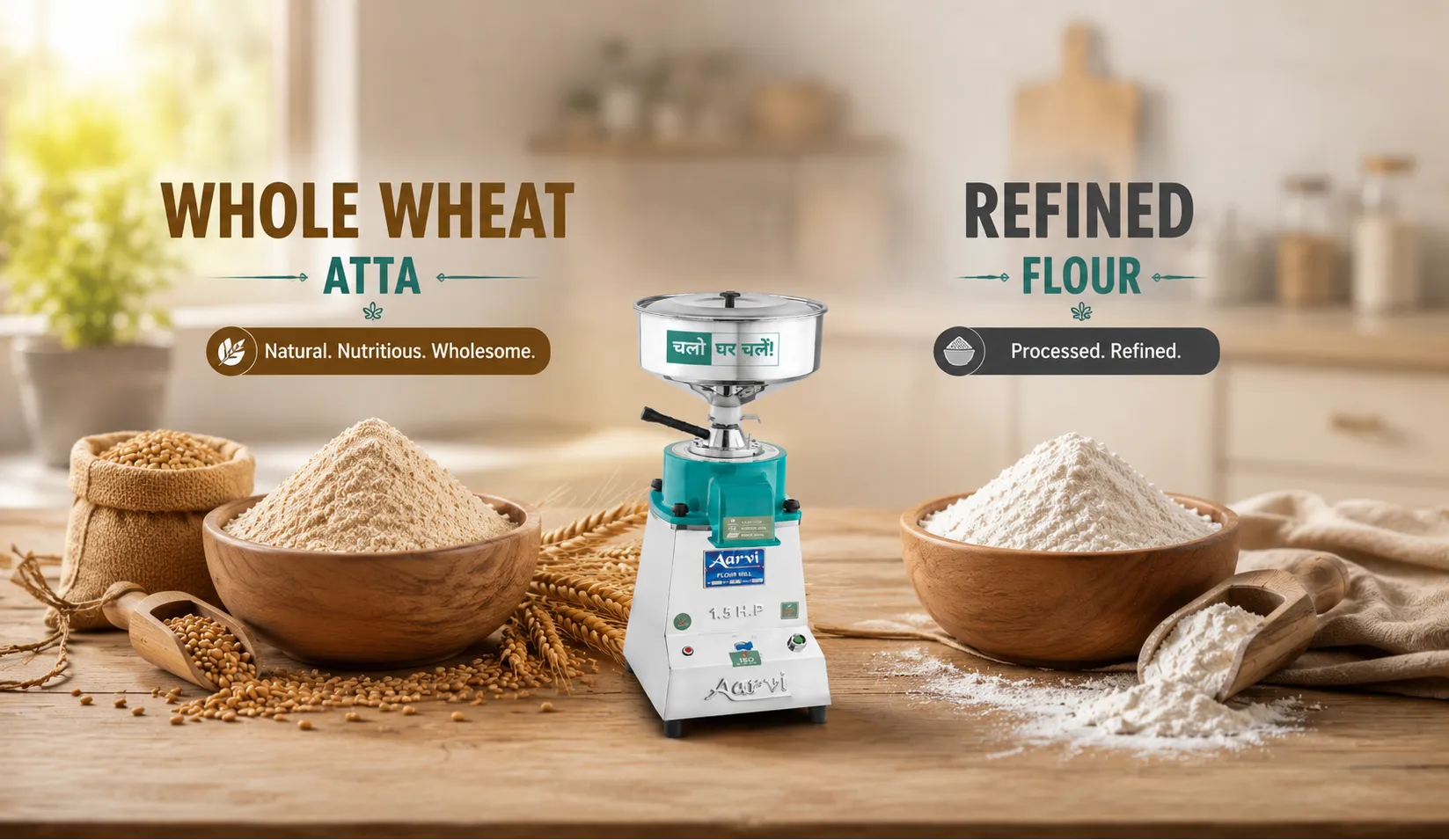
Whole wheat atta is made by grinding the complete wheat grain, including the bran, germ, and endosperm. Refined flour, commonly known as maida, goes through additional processing where the bran and germ are removed.
For families who want to make more informed choices about their everyday food, understanding the difference between these two types of flour can help.
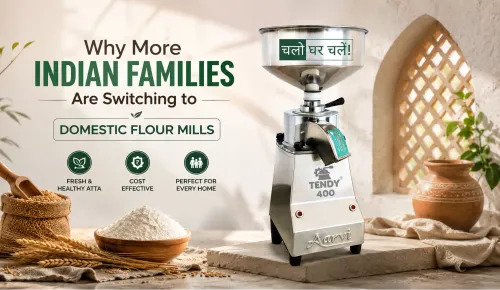
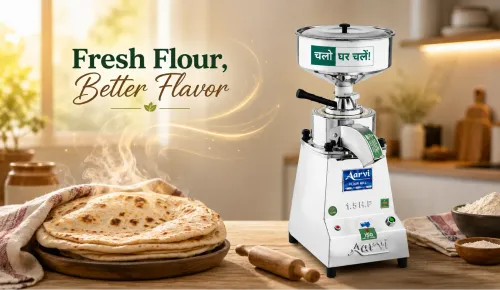
And with a domestic flour mill at home, you can take freshness one step further by grinding wheat whenever you need it.
What is Whole Wheat Atta?
Whole wheat atta is made by grinding the entire wheat grain. Since the bran, germ, and endosperm are retained, whole wheat flour contains the naturally occurring components of the complete grain.
It is a traditional staple in Indian kitchens and is commonly used to prepare:
- Roti and chapati
- Paratha
- Thepla
- Bhakri
- Puri
- Homemade breads
Whole wheat atta has a naturally rich taste and aroma that makes it a popular choice for everyday Indian meals.
When wheat is freshly ground at home, you can choose your grains and grind the quantity you need, giving you greater control over the flour you use in your kitchen.
What is Refined Flour?
Refined flour, commonly known as maida, is processed differently from whole wheat atta.
During the refining process, the bran and germ are removed, leaving mainly the endosperm. This gives refined flour its characteristic fine, smooth, and soft texture.
Because of its texture and baking properties, refined flour is commonly used in:
- Cakes
- Biscuits
- Cookies
- Pastries
- Pizza bases
- Naan
- Bakery products
- Packaged snacks
Refined flour has its own place in cooking and baking. However, it is processed differently from whole wheat atta and is generally used for different culinary purposes.
Whole Wheat Atta vs Refined Flour: What's the Difference?
The main difference between whole wheat atta and refined flour is how much of the wheat grain remains after processing.
FeatureWhole Wheat AttaRefined FlourSourceComplete wheat grainMainly wheat endospermProcessingLess refinedMore processedBranRetainedRemovedGermRetainedRemovedTextureNaturally coarseFine and smoothCommon UsesRoti, chapati, paratha, bhakriCakes, biscuits, pastries, bakery foodsEveryday UseCommonly used for daily Indian mealsOften used for specific recipes and baking
Understanding this difference makes it easier to choose the right flour based on your family's cooking habits and dietary preferences.
Why Do Many Families Prefer Whole Wheat Atta?
For everyday Indian meals, whole wheat atta has been a traditional choice for generations.
Since it is made using the complete wheat grain, it naturally retains the bran and germ that are removed during the refining process.
Some reasons families choose whole wheat atta include:
Naturally Contains Dietary Fiber
Whole wheat atta retains the bran, which is a natural source of dietary fiber. Fiber is an important part of a balanced diet and is one reason whole grains are commonly included in healthy eating patterns.
Made From the Complete Grain
Unlike refined flour, whole wheat atta is produced using the complete wheat grain. This makes it a more traditional option for everyday foods such as roti and chapati.
Perfect for Everyday Indian Meals
From morning breakfast to dinner, whole wheat atta fits naturally into a variety of Indian recipes. Fresh rotis, parathas, theplas, and bhakris are all commonly prepared using wheat atta.
Naturally Rich Taste and Aroma
Freshly ground wheat has a distinctive aroma and flavour. Grinding wheat at home allows you to enjoy freshly prepared atta whenever you need it.
More Control Over Your Flour
When you grind wheat at home, you have greater control over the grains you choose and the quantity you grind. This can make your everyday food preparation feel more fresh and personal.
Is Freshly Ground Atta Better Than Stored Flour?
Freshness is one of the biggest reasons many families consider bringing a flour mill into their home.
When you grind wheat at home, you can prepare fresh atta according to your family's requirements instead of purchasing large quantities of pre-ground flour for extended storage.
You can choose the wheat grains yourself, grind them when required, and use the freshly prepared atta in your daily cooking.
A simple home grinding routine can look like this:
Choose Your Wheat → Grind Fresh → Store Properly → Prepare Your Meal
This gives you more control over the flour you use while making fresh grinding a convenient part of your everyday kitchen routine.
Why a Domestic Flour Mill Makes Fresh Atta Convenient
The idea of freshly ground atta sounds appealing, but convenience is equally important in a busy household.
A modern domestic flour mill makes it possible to bring the grinding process into your own kitchen. You can grind wheat according to your family's needs without depending entirely on pre-ground flour.
With a domestic flour mill, you can enjoy:
- Freshly ground atta at home
- Better control over your wheat selection
- Convenient grinding whenever required
- Reduced dependence on pre-ground flour
- Fresh flour as part of your regular kitchen routine
It is a simple way to bring the traditional experience of fresh grinding into a modern Indian kitchen.
Which is Better for Your Family: Whole Wheat Atta or Refined Flour?
The answer depends on what you are preparing and how you use it.
For everyday foods such as roti, chapati, paratha, and bhakri, whole wheat atta is a natural choice for many Indian families because it is made from the complete wheat grain.
For cakes, biscuits, pastries, and other bakery products, refined flour is often preferred because its fine texture and baking characteristics work well for these recipes.
So, the choice doesn't always have to be about completely eliminating one type of flour. Instead, it is about understanding the differences and choosing the right flour for the right purpose.
For everyday meals, many families prefer whole wheat atta. For specific baking recipes, refined flour can have its own culinary advantages.
A balanced diet also depends on your overall food choices, portion sizes, cooking methods, and individual dietary needs.
Fresh Atta Starts With the Grain You Choose
The journey of your daily roti begins long before it reaches your plate.
It starts with the wheat grain you select.
When you choose whole wheat and grind it at home, you have greater control over one of the most frequently used ingredients in your kitchen.
A domestic flour mill allows you to make fresh grinding a part of your everyday routine. You can select your wheat, grind it when needed, and prepare fresh atta for your family's meals.
From grain to flour and from flour to warm homemade rotis, every step becomes part of a more connected cooking experience.
Why Choose Freshly Ground Atta at Home?
For families who value freshness and want greater control over their ingredients, home grinding can be a practical choice.
Instead of relying only on pre-ground flour, you can grind wheat according to your requirements and enjoy freshly prepared atta in your daily meals.
A domestic flour mill can be especially useful for families who:
- Prefer freshly ground atta
- Want to choose their own wheat grains
- Prepare rotis and chapatis regularly
- Want convenient home grinding
- Prefer a more traditional approach to food preparation
Fresh grinding isn't about making your kitchen routine complicated. It is about making fresh atta more accessible and convenient.
Final Thoughts
Choosing between whole wheat atta and refined flour starts with understanding the difference between them.
Whole wheat atta is made from the complete wheat grain and is a traditional choice for everyday Indian meals, while refined flour is more processed and is widely used for baking and recipes that require a fine, smooth texture.
For families who regularly prepare rotis, chapatis, parathas, or other wheat-based meals, whole wheat atta can be a practical part of an everyday balanced diet.
And if freshness matters to your family, a domestic flour mill can make it easier to grind wheat at home whenever you need it. You can choose your grains, grind fresh, and enjoy greater control over the flour that goes into your family's meals.
At the end of the day, healthy eating is about making informed choices consistently. Choose the right flour for the right purpose, focus on a balanced diet, and make freshness a part of your everyday kitchen routine.
Whole Wheat Atta for Everyday Meals
Fresh Grain. Fresh Atta. Fresh Choices.
Keywords