From Wheat to Fresh Atta: What Really Happens Inside a Home Flour Mill?
For many Indian households, atta is an everyday kitchen essential. From soft rotis and parathas to thepla and other traditional recipes, wheat flour is used regularly. But have you ever wondered what actually happens when whole wheat goes into a home flour mill and comes out as fresh atta?
A modern domestic flour mill makes this everyday process simple. Instead of purchasing ready-made flour, families can keep whole grains at home and grind them whenever fresh flour is needed. The process combines traditional grain grinding with the convenience of a modern kitchen appliance.
How Does a Home Flour Mill Work?
The basic process of making fresh atta at home is simple: select the grain, prepare it for grinding, place it in the hopper, and let the flour mill do the grinding.
Inside a home atta chakki, the grain moves from the hopper towards the grinding chamber. The internal grinding mechanism breaks the grain down into flour, which is then collected for everyday use.
This simple process allows households to prepare fresh flour according to their requirements instead of storing large quantities of packaged atta.
1. It Starts With the Right Quality Wheat
The journey from wheat to fresh atta begins with the grain itself.
Good-quality, clean and properly stored wheat is important when preparing wheat flour at home. Before grinding, the grains should be checked for unwanted particles and stored in a clean, dry place.
Since a domestic flour mill gives you control over the grain you use, you can select wheat according to your family's preferences.
The simple principle is:
Better grain selection → Better control over your homemade flour.
2. The Wheat Goes Into the Hopper
Once the wheat is ready, it is added to the hopper of the home flour mill.
The hopper is the upper section of the machine that holds the grain before it enters the grinding chamber. Depending on the model and its capacity, the amount of grain you can add at one time may vary.
This makes the process convenient because the grain can be loaded directly into the machine without complicated preparation.
3. Grinding Begins Inside the Flour Mill
After the machine is switched on, the wheat gradually moves from the hopper towards the grinding chamber.
This is where the main transformation takes place. The grinding mechanism works on the grains and breaks them down into flour. Modern automatic flour mills are designed to make this process convenient for regular household use.
The result is freshly ground flour that can be used immediately for cooking.
4. From Whole Wheat to Fresh Atta
The most interesting part of the process is the transformation of the whole grain into flour.
Instead of starting with commercially processed flour, you start with whole wheat and grind it at home according to your requirement. This gives you greater control over the complete process of preparing fresh atta at home.
For families that regularly prepare rotis, parathas or thepla, this can make fresh flour preparation a convenient part of the kitchen routine.
5. Why Freshly Ground Flour Can Be Convenient
One reason people choose a home atta chakki is the convenience of grinding flour when required.
Rather than purchasing and storing large quantities of ready-made atta, you can grind smaller quantities according to your household's needs.
Freshly ground flour also has the familiar aroma and texture associated with traditionally prepared atta, making it suitable for everyday Indian cooking.
6. A Home Flour Mill Is Not Limited to Wheat
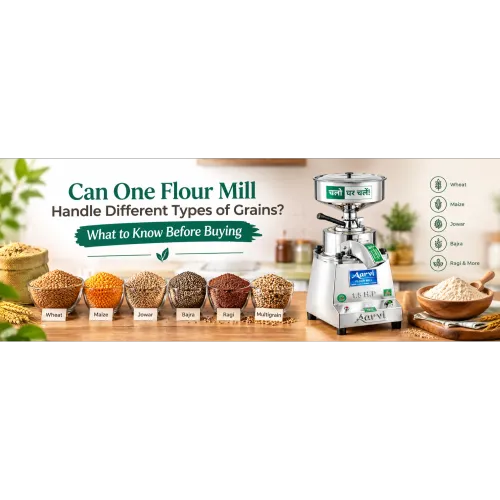
Depending on the machine's specifications and suitability, some domestic flour mills can also be used for different grains.
Common examples include:
- Jowar
- Bajra
- Maize
- Ragi
- Wheat
- Suitable multigrain combinations
This makes a flour mill for home useful for households that want more flexibility in preparing different types of flour.
However, it is always important to check the manufacturer's recommended grains and operating instructions before grinding anything other than wheat.
7. What Happens to the Flour After Grinding?
Once the grinding process is complete, the flour is collected from the machine and can be used for cooking.
For regular household use, freshly prepared flour can be used for:
- Rotis
- Chapatis
- Parathas
- Thepla
- Puris
- Other flour-based Indian recipes
The quantity can also be prepared according to the family's daily or weekly cooking requirements.
8. Why the Grinding Process Matters
The quality of the final flour depends on several factors, including the quality of the grain, its storage condition, the flour mill being used and the way the machine is operated.
That is why choosing a suitable home flour mill and following the manufacturer's instructions is important.
Regular cleaning and proper maintenance can also help keep the machine ready for consistent everyday use.
9. Fresh Atta With More Control at Home
One of the biggest differences between buying packaged flour and grinding wheat at home is the level of control.
With a domestic atta chakki, you decide:
- Which wheat or grain to use
- How much flour to prepare
- When to grind it
- Whether to prepare different grain combinations
- How the flour fits into your family's cooking routine
This makes home grinding an interesting option for families who prefer greater control over everyday ingredients.
Home Flour Mill vs Traditional Grinding
Traditional grain grinding has been part of Indian food culture for generations. Modern automatic flour mills bring the same basic idea of grinding grains into a more convenient household appliance.
The difference is mainly in convenience and everyday usability. Instead of manually grinding grains, a modern home atta chakki allows the process to be handled with an appliance designed for regular kitchen use.
This brings a traditional way of preparing flour into the modern Indian kitchen.
How to Get Better Results From Your Home Flour Mill
Getting good results from a flour mill at home is not only about the machine. The way you use and maintain it also matters.
A few simple practices can help:
- Use clean and properly stored grains.
- Avoid overloading the hopper.
- Follow the recommended operating instructions.
- Clean the grinding area regularly.
- Keep the machine dry and free from unnecessary moisture.
- Use only grains recommended for your particular flour mill.
- Follow the manufacturer's maintenance guidelines.
These simple habits can help maintain the machine and make everyday flour preparation easier.
From One Grain to Everyday Homemade Atta
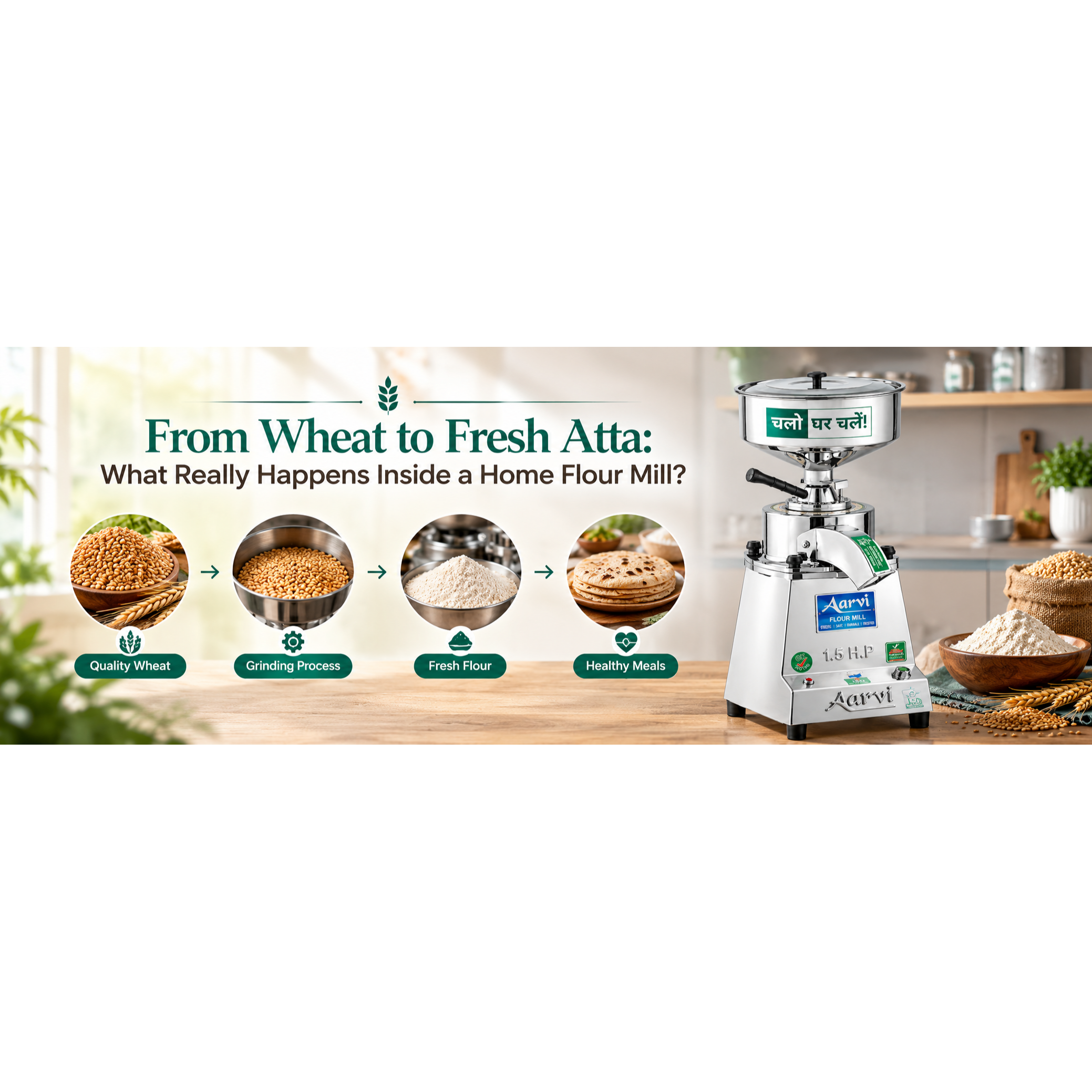
The journey may look simple, but there is a clear process behind every batch of homemade flour:
Quality Wheat → Hopper → Grinding Chamber → Fresh Flour → Everyday Indian Meals
A home flour mill brings these steps together in one convenient appliance. What starts as whole wheat can become fresh atta ready for rotis, parathas, thepla and other family favourites.
Is a Home Flour Mill Useful for Indian Families?
For households that regularly consume wheat flour, a domestic flour mill can be a practical kitchen appliance.
It allows families to keep whole grains at home, prepare flour according to their requirements and make fresh atta part of their regular cooking routine.
Whether you live in an apartment or a larger family home, choosing the right flour mill for home depends on factors such as family size, daily flour consumption, available kitchen space, machine capacity and the grains you want to grind.
Final Thoughts
The journey from wheat to fresh atta is more than simply putting grains into a machine. It involves choosing the right grain, feeding it into the hopper, grinding it properly and collecting fresh flour for everyday cooking.
A modern home flour mill makes this traditional process more convenient for today's Indian households. With the right grain, proper usage and regular maintenance, a home atta chakki can become a useful part of an everyday kitchen routine.
From whole wheat to fresh atta, the process starts at home.
Keywords